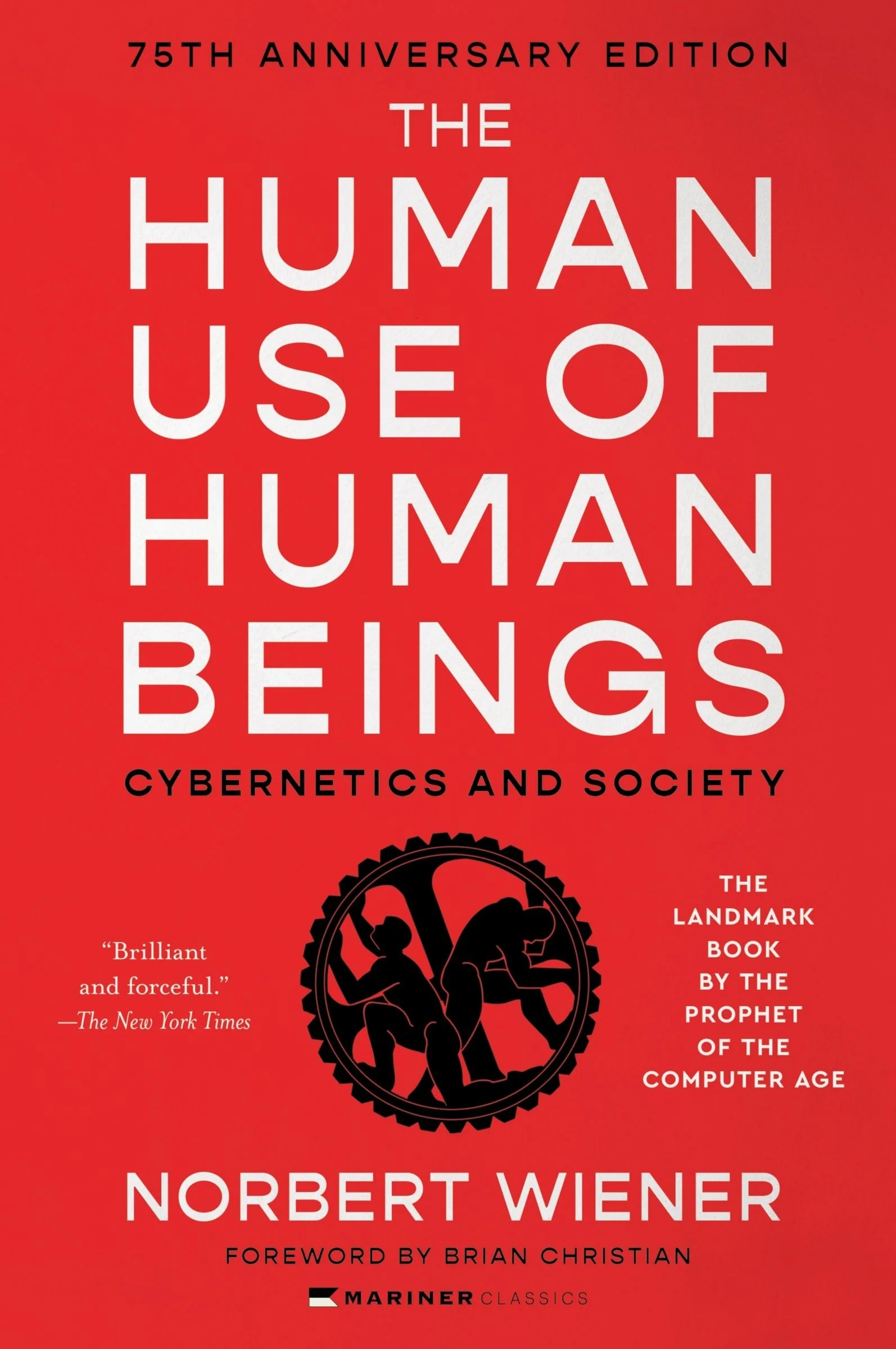
The Human Use of Human Beings
For the 75th anniversary, a new edition of The Human Use of Human Beings—the landmark book that delves into the relationship between humans and computers, and presciently anticipates many contemporary dilemmas surrounding AI technology. With a new introduction by Brian Christian, author of the bestselling Algorithms to Live By and The Alignment Problem.
In 1950, mathematician-philosopher Norbert Wiener ended this classic book on the place of machines in society with a warning: “We shall never receive the right answers to our questions unless we ask the right questions.... The hour is very late, and the choice of good and evil knocks at our door.”
Wiener, the founder of the science of cybernetics—the study of the relationship between computers and the human nervous system—was widely mislabeled as an advocate for the automation of human life. As The Human Use for Human Beings reveals, his vision was much more complex and interesting, and is more relevant in today’s world of AI than anyone could have anticipated.
In his new introduction, Brian Christian aptly calls Wiener the “progenitor of contemporary AI-safety discourse.” Wiener hoped that machines would release people from relentless and repetitive drudgery to achieve more creative pursuits, yet he anticipated the danger of dehumanizing and displacement. His pioneering views on the human-machine relationship as a “communicative process” are only more crucial now, as we carry in our pockets AI devices that we can literally speak to. His prescient warnings illuminate our contemporary relationships with language, art, and even social media.
The Human Use of Human Beings examines the implications of cybernetics for education, law, language, science, technology, as Wiener anticipates the enormous impact—in effect, a third industrial revolution—that the computer has had on our lives.
Wiener’s prescient analysis grapples with the core principles of the information age:
- AI Safety and Control: Decades before modern AI, Wiener warned of the “sorcerer’s apprentice” problem, laying the groundwork for today’s AI-safety discourse by questioning how to align machine decisions with human values.
- Information vs. Entropy: A groundbreaking look at how society, life, and technology are all temporary islands of order fighting against the universal tendency toward chaos and decay.
- Feedback Mechanisms: Discover how feedback—the process of adjusting future conduct by past performance—is the fundamental mechanism of control in everything from steam engines to the human nervous system.
- Social Impact of Technology: A visionary forecast of how intelligent machines would reshape law, language, and culture, posing a profound choice for humanity “between good and evil.”
For the 75th anniversary, a new edition of The Human Use of Human Beings—the landmark book that delves into the relationship between humans and computers, and presciently anticipates many contemporary dilemmas surrounding AI technology. With a new introduction by Brian Christian, author of the bestselling Algorithms to Live By and The Alignment Problem.
In 1950, mathematician-philosopher Norbert Wiener ended this classic book on the place of machines in society with a warning: “We shall never receive the right answers to our questions unless we ask the right questions.... The hour is very late, and the choice of good and evil knocks at our door.”
Wiener, the founder of the science of cybernetics—the study of the relationship between computers and the human nervous system—was widely mislabeled as an advocate for the automation of human life. As The Human Use for Human Beings reveals, his vision was much more complex and interesting, and is more relevant in today’s world of AI than anyone could have anticipated.
In his new introduction, Brian Christian aptly calls Wiener the “progenitor of contemporary AI-safety discourse.” Wiener hoped that machines would release people from relentless and repetitive drudgery to achieve more creative pursuits, yet he anticipated the danger of dehumanizing and displacement. His pioneering views on the human-machine relationship as a “communicative process” are only more crucial now, as we carry in our pockets AI devices that we can literally speak to. His prescient warnings illuminate our contemporary relationships with language, art, and even social media.
The Human Use of Human Beings examines the implications of cybernetics for education, law, language, science, technology, as Wiener anticipates the enormous impact—in effect, a third industrial revolution—that the computer has had on our lives.
Wiener’s prescient analysis grapples with the core principles of the information age:
- AI Safety and Control: Decades before modern AI, Wiener warned of the “sorcerer’s apprentice” problem, laying the groundwork for today’s AI-safety discourse by questioning how to align machine decisions with human values.
- Information vs. Entropy: A groundbreaking look at how society, life, and technology are all temporary islands of order fighting against the universal tendency toward chaos and decay.
- Feedback Mechanisms: Discover how feedback—the process of adjusting future conduct by past performance—is the fundamental mechanism of control in everything from steam engines to the human nervous system.
- Social Impact of Technology: A visionary forecast of how intelligent machines would reshape law, language, and culture, posing a profound choice for humanity “between good and evil.”
Description
For the 75th anniversary, a new edition of The Human Use of Human Beings—the landmark book that delves into the relationship between humans and computers, and presciently anticipates many contemporary dilemmas surrounding AI technology. With a new introduction by Brian Christian, author of the bestselling Algorithms to Live By and The Alignment Problem.
In 1950, mathematician-philosopher Norbert Wiener ended this classic book on the place of machines in society with a warning: “We shall never receive the right answers to our questions unless we ask the right questions.... The hour is very late, and the choice of good and evil knocks at our door.”
Wiener, the founder of the science of cybernetics—the study of the relationship between computers and the human nervous system—was widely mislabeled as an advocate for the automation of human life. As The Human Use for Human Beings reveals, his vision was much more complex and interesting, and is more relevant in today’s world of AI than anyone could have anticipated.
In his new introduction, Brian Christian aptly calls Wiener the “progenitor of contemporary AI-safety discourse.” Wiener hoped that machines would release people from relentless and repetitive drudgery to achieve more creative pursuits, yet he anticipated the danger of dehumanizing and displacement. His pioneering views on the human-machine relationship as a “communicative process” are only more crucial now, as we carry in our pockets AI devices that we can literally speak to. His prescient warnings illuminate our contemporary relationships with language, art, and even social media.
The Human Use of Human Beings examines the implications of cybernetics for education, law, language, science, technology, as Wiener anticipates the enormous impact—in effect, a third industrial revolution—that the computer has had on our lives.
Wiener’s prescient analysis grapples with the core principles of the information age:
- AI Safety and Control: Decades before modern AI, Wiener warned of the “sorcerer’s apprentice” problem, laying the groundwork for today’s AI-safety discourse by questioning how to align machine decisions with human values.
- Information vs. Entropy: A groundbreaking look at how society, life, and technology are all temporary islands of order fighting against the universal tendency toward chaos and decay.
- Feedback Mechanisms: Discover how feedback—the process of adjusting future conduct by past performance—is the fundamental mechanism of control in everything from steam engines to the human nervous system.
- Social Impact of Technology: A visionary forecast of how intelligent machines would reshape law, language, and culture, posing a profound choice for humanity “between good and evil.”