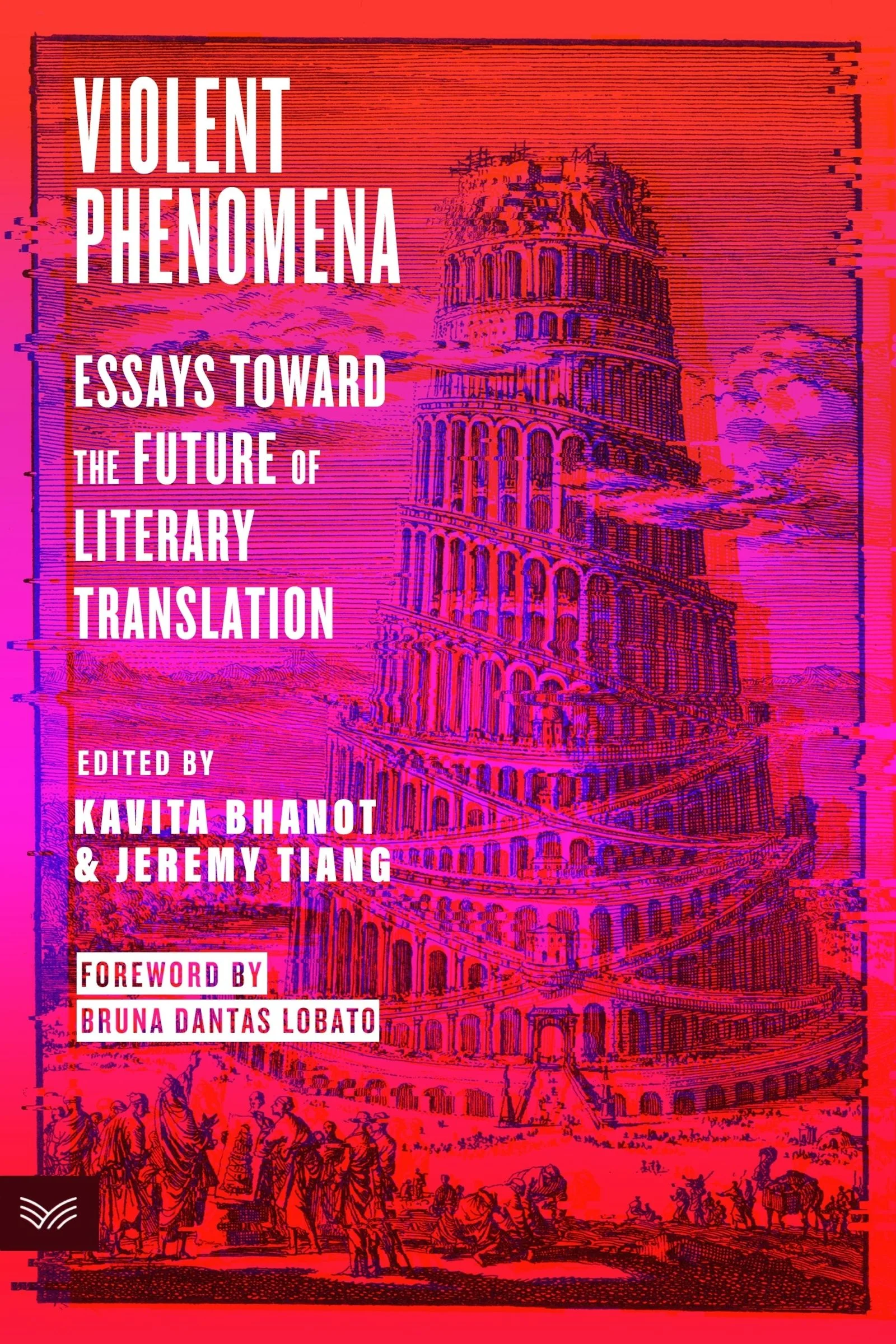
Violent Phenomena
“These essays, deftly blending the political and the personal, offer fresh, galvanizing, and passionate perspectives on literary translation.”—Jhumpa Lahiri
A manifesto in 22 essays, Violent Phenomena breaks stale rules about who can and should translate, envisioning a future more reflective of the beautiful polyphony of literature in all languages.
?What would it take to unlearn centuries of colonial influence over the books we read? The values, institutions, and structures that determine which of the world’s books and authors are translated, and by whom, are in dire need of disruption. Violent Phenomena brings together established and emerging translators from around the world to guide the way.
Frantz Fanon wrote in 1961 that “Decolonization is always a violent phenomenon,” meaning that the violence of colonialism can only be counteracted in kind. As colonial legacies linger today, what are the ways in which we can disentangle literary translation from imperial violence? In stark contrast with their predecessors, who were trained to be as “neutral” as possible, the contributors to Violent Phenomena demand engagement with the translator’s identity, voice, and cultural context, which shapes the result and in turn has an outsize influence on how a writer’s work is received.
From Anton Hur on “The Mythical English Reader” to Sawad Hussain’s “Why Don’t You Translate Pakistanian?,” these essays face the hard questions head on, offering readers the tools they need to demand a new literary playing field.
Features a new foreword by award-winning translator and author Bruna Dantas Lobato.
“These essays, deftly blending the political and the personal, offer fresh, galvanizing, and passionate perspectives on literary translation.”—Jhumpa Lahiri
A manifesto in 22 essays, Violent Phenomena breaks stale rules about who can and should translate, envisioning a future more reflective of the beautiful polyphony of literature in all languages.
?What would it take to unlearn centuries of colonial influence over the books we read? The values, institutions, and structures that determine which of the world’s books and authors are translated, and by whom, are in dire need of disruption. Violent Phenomena brings together established and emerging translators from around the world to guide the way.
Frantz Fanon wrote in 1961 that “Decolonization is always a violent phenomenon,” meaning that the violence of colonialism can only be counteracted in kind. As colonial legacies linger today, what are the ways in which we can disentangle literary translation from imperial violence? In stark contrast with their predecessors, who were trained to be as “neutral” as possible, the contributors to Violent Phenomena demand engagement with the translator’s identity, voice, and cultural context, which shapes the result and in turn has an outsize influence on how a writer’s work is received.
From Anton Hur on “The Mythical English Reader” to Sawad Hussain’s “Why Don’t You Translate Pakistanian?,” these essays face the hard questions head on, offering readers the tools they need to demand a new literary playing field.
Features a new foreword by award-winning translator and author Bruna Dantas Lobato.
Original: $15.20
-70%$15.20
$4.56Description
“These essays, deftly blending the political and the personal, offer fresh, galvanizing, and passionate perspectives on literary translation.”—Jhumpa Lahiri
A manifesto in 22 essays, Violent Phenomena breaks stale rules about who can and should translate, envisioning a future more reflective of the beautiful polyphony of literature in all languages.
?What would it take to unlearn centuries of colonial influence over the books we read? The values, institutions, and structures that determine which of the world’s books and authors are translated, and by whom, are in dire need of disruption. Violent Phenomena brings together established and emerging translators from around the world to guide the way.
Frantz Fanon wrote in 1961 that “Decolonization is always a violent phenomenon,” meaning that the violence of colonialism can only be counteracted in kind. As colonial legacies linger today, what are the ways in which we can disentangle literary translation from imperial violence? In stark contrast with their predecessors, who were trained to be as “neutral” as possible, the contributors to Violent Phenomena demand engagement with the translator’s identity, voice, and cultural context, which shapes the result and in turn has an outsize influence on how a writer’s work is received.
From Anton Hur on “The Mythical English Reader” to Sawad Hussain’s “Why Don’t You Translate Pakistanian?,” these essays face the hard questions head on, offering readers the tools they need to demand a new literary playing field.
Features a new foreword by award-winning translator and author Bruna Dantas Lobato.