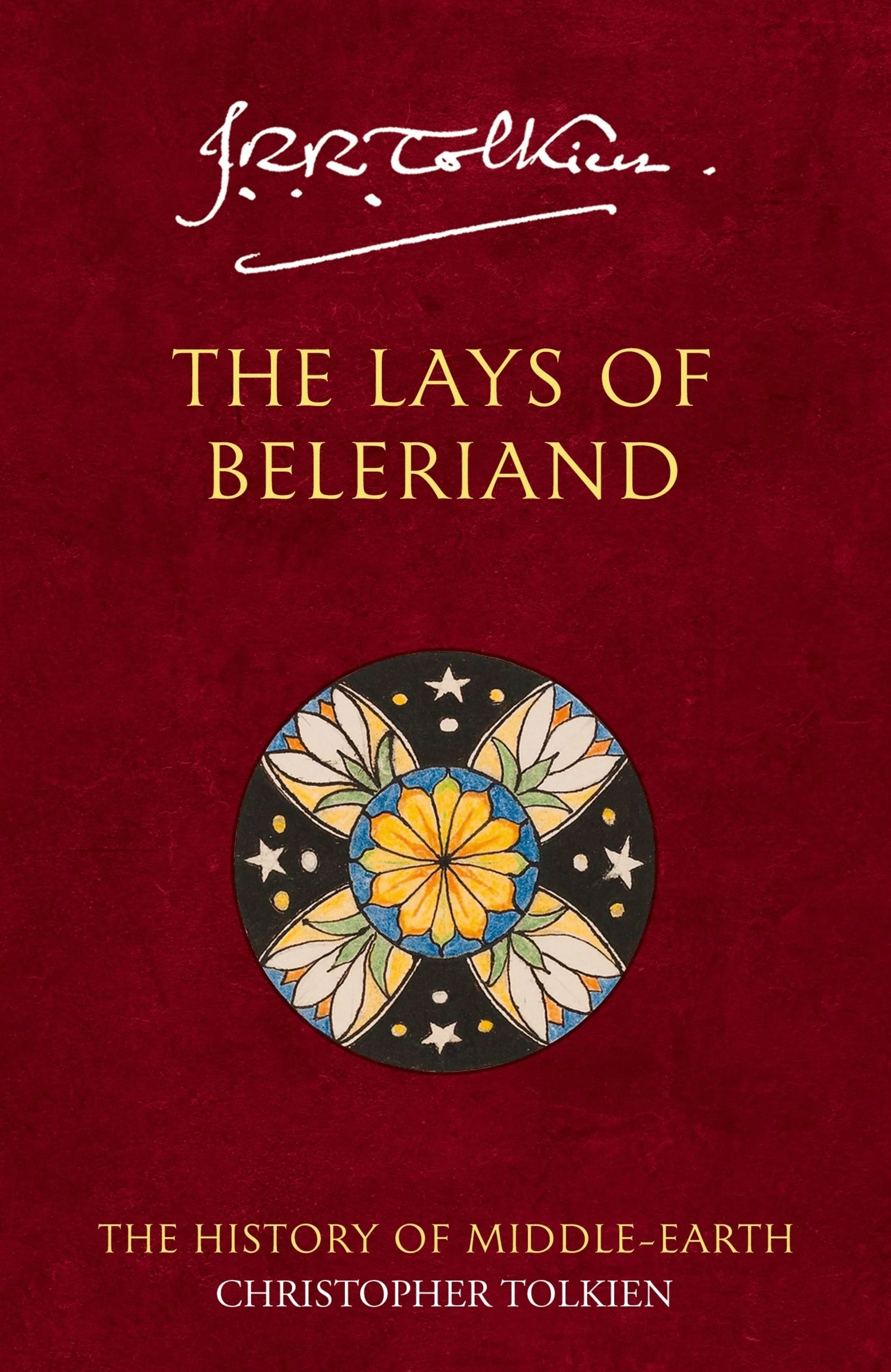
The Lays of Beleriand
The third volume of The History of Middle-earth contains the early myths and legends which led to the writing of Tolkien’s epic tale of war, The Silmarillion.
The Lays of Beleriand, the third volume of The History of Middle-earth, gives us a privileged insight into the creation of the mythology of Middle-earth, through the alliterative verse tales of two of the most crucial stories in Tolkien’s world – those of Turien and Lúthien. The first of the poems is the unpublished “Lay of The Children of Húrin,” narrating on a grand scale the tragedy of Túrin Turambar. The second is the moving “Lay of Leithian,” the chief source of the tale of Beren and Lúthien in The Silmarillion, telling of the Quest of the Silmaril and the encounter with Morgoth in his subterranean fortress.
Accompanying the poems are commentaries on the evolution of the history of the Elder Days. Also included is the notable criticism of “The Lay of The Leithian” by C. S. Lewis, who read the poem in 1929.
The third volume of The History of Middle-earth contains the early myths and legends which led to the writing of Tolkien’s epic tale of war, The Silmarillion.
The Lays of Beleriand, the third volume of The History of Middle-earth, gives us a privileged insight into the creation of the mythology of Middle-earth, through the alliterative verse tales of two of the most crucial stories in Tolkien’s world – those of Turien and Lúthien. The first of the poems is the unpublished “Lay of The Children of Húrin,” narrating on a grand scale the tragedy of Túrin Turambar. The second is the moving “Lay of Leithian,” the chief source of the tale of Beren and Lúthien in The Silmarillion, telling of the Quest of the Silmaril and the encounter with Morgoth in his subterranean fortress.
Accompanying the poems are commentaries on the evolution of the history of the Elder Days. Also included is the notable criticism of “The Lay of The Leithian” by C. S. Lewis, who read the poem in 1929.
Original: $11.99
-70%$11.99
$3.60Description
The third volume of The History of Middle-earth contains the early myths and legends which led to the writing of Tolkien’s epic tale of war, The Silmarillion.
The Lays of Beleriand, the third volume of The History of Middle-earth, gives us a privileged insight into the creation of the mythology of Middle-earth, through the alliterative verse tales of two of the most crucial stories in Tolkien’s world – those of Turien and Lúthien. The first of the poems is the unpublished “Lay of The Children of Húrin,” narrating on a grand scale the tragedy of Túrin Turambar. The second is the moving “Lay of Leithian,” the chief source of the tale of Beren and Lúthien in The Silmarillion, telling of the Quest of the Silmaril and the encounter with Morgoth in his subterranean fortress.
Accompanying the poems are commentaries on the evolution of the history of the Elder Days. Also included is the notable criticism of “The Lay of The Leithian” by C. S. Lewis, who read the poem in 1929.